The Virtual Boy is technically classed as 'portable', so don't expect game-changing accessories (pun intended). That said, there are still a few extras worth noting.
Available interfaces
Internally, nearly every component is directly connected to the CPU, with the exception of some areas handled exclusively by the VIP.
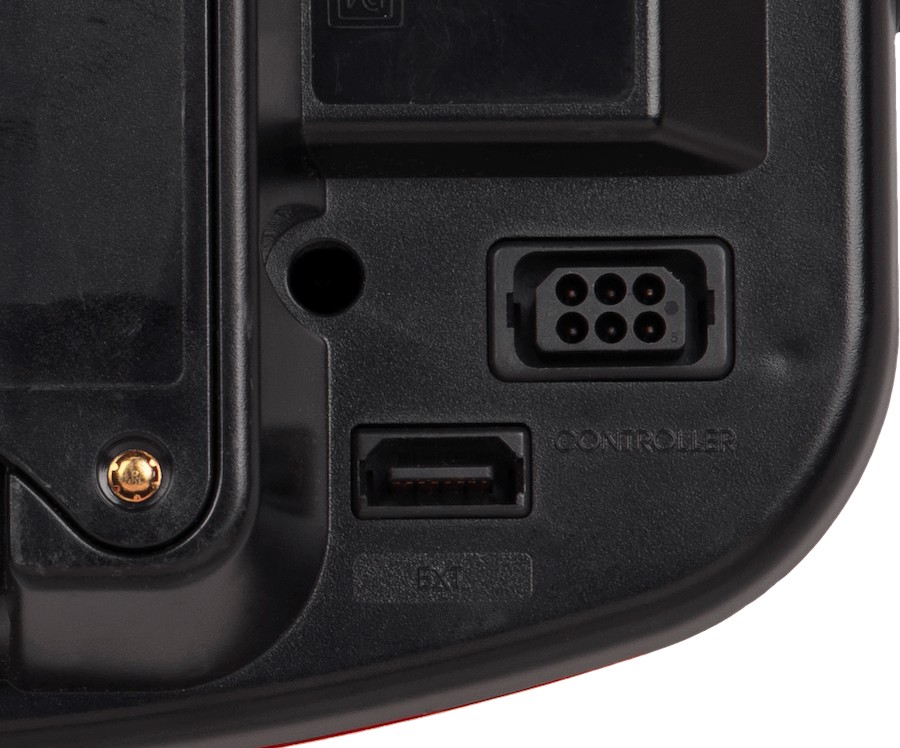
View of the underside of the case (right-hand side) , showing the Serial port and Communications port.
Externally, the console features two connectors for accessories:
- The Serial Port: Connects the controller, with data transferred in a serial manner (one bit at a time) . The interface adapts the transmission into a 16-bit value for the CPU to read. In turn, the CPU interprets each bit place as a button input. Interrupts can also be set up to notify the CPU the instant any key is pressed.
- One pin on this connector supplies 5 Volts from the controller to the console, in that direction. This is actually used to power the console!
- The Communications Port: Whilst not an accessory per se, this port enables the communication between two Virtual Boys. This reminds me of the Game Boy's Link cable. The two Virtual Boys communicate in a master-slave manner using serial data streams.
- Unfortunately, no game ended up using this feature. Yet, this really makes you wonder what kind of multiplayer functionality was Nintendo envisioning.
The provider
The controller of the Virtual Boy is very peculiar compared to the rest of the console line. It is somewhat similar to the Super Nintendo one, albeit without the 'X' & 'Y' buttons, featuring a larger grip and an extra D-Pad on the right-hand side. Most notably, it was designed to prevent being looked at during gameplay.
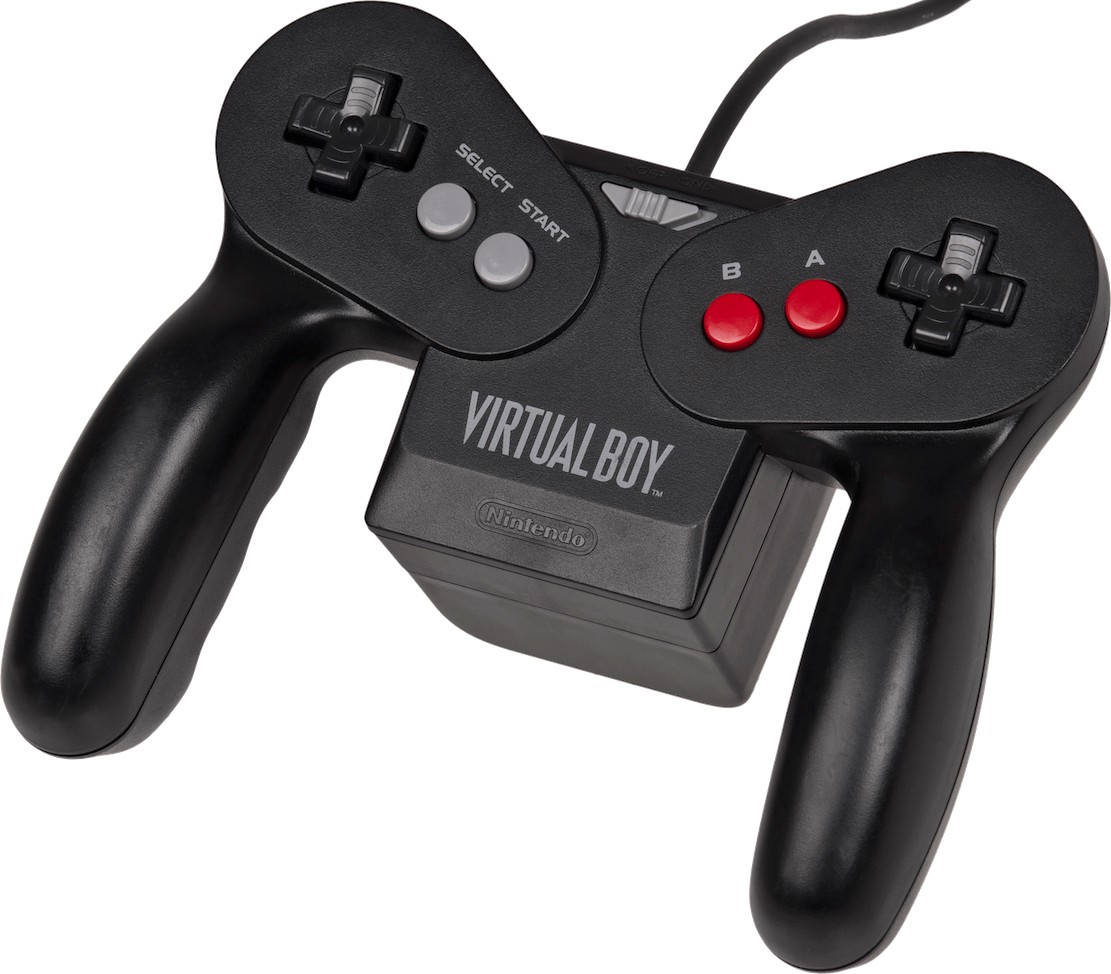
The controller . Notice the slider on the top-centre, that's the power switch.
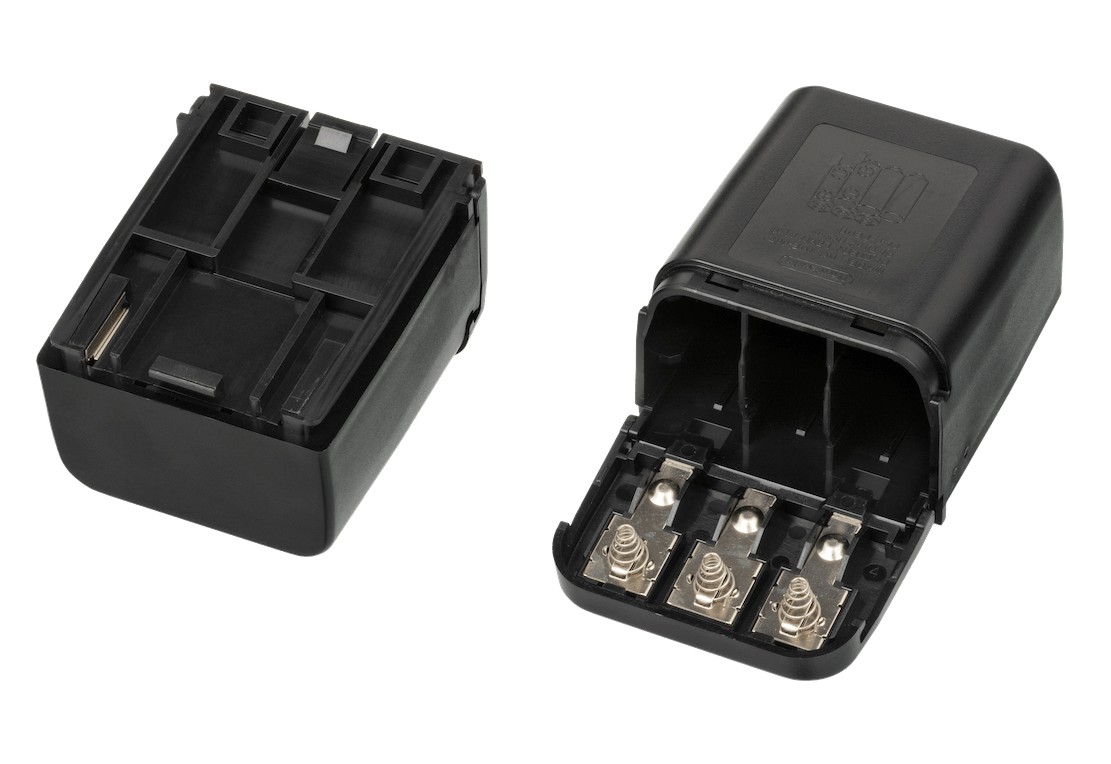
Battery cartridge fitted at the back .
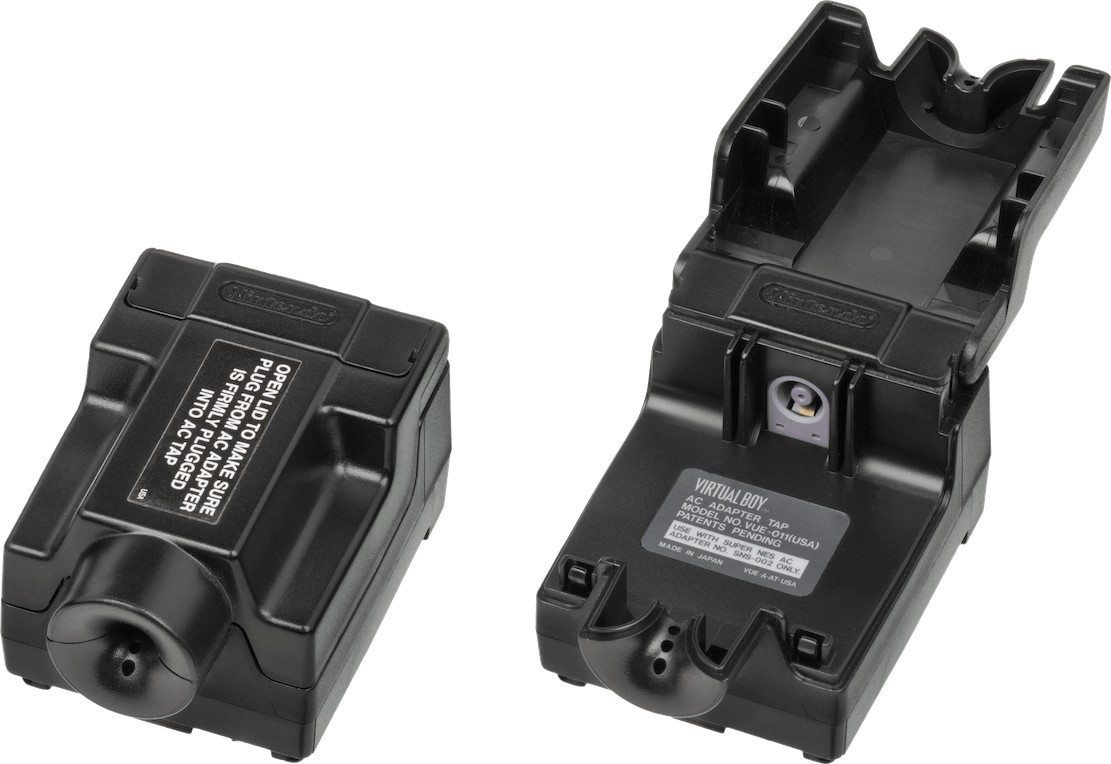
Alternative cartridge (sold as a separate accessory) that performs AC to DC conversion, eliminating the need for batteries . It draws energy from the SNES power brick instead.
Moreover, the controller was also meant to supply power to the console, so it comes with a removable battery magazine on the back. The cartridge, called Tap, holds six AA batteries. For those users who got fed up with searching for replacements whenever any of the six ran out, Nintendo offered an alternative Tap that connects to an external AC power supply.
I have to admit, when I tried using the Virtual Boy with the AC Tap connected (since hunting for six fully-charged batteries is a pain), playing any game felt like a house of cards - I had to stay mindful of the tangled cables while being unable to look outside the eyepiece. But I guess that's the price to pay if you'd rather not worry about batteries!